
Raising a Cane Corso puppy needs all your effort. Train your puppy early and often. This helps them become a good adult dog. The right exercise keeps them healthy. Cane Corso puppies are strong and smart. You must know what it means to own this dog. This guide gives important tips. It helps you raise and train your Cane Corso well.
Key Takeaways
Start training and showing your Cane Corso puppy new things early. This helps them become a well-behaved adult dog.
Use positive rewards like treats and praise when training your puppy. This builds trust and encourages good behavior.
Give your Cane Corso puppy 60-90 minutes of exercise daily. This includes walks, play, and activities that make them think.
Choose good food for your puppy. Avoid too much protein and calcium. This protects their growing joints.
Watch for signs of illness and take your puppy to the vet regularly. This keeps them healthy as they grow.
Understanding Your Cane Corso's Temperament
Breed Characteristics and Instincts
The Cane Corso is a strong and smart dog. You need to know their natural traits. These dogs came from Roman war dogs. They were called 'fighting dogs'. They fought in battles. Later, Italian farmers used them. They guarded farms and animals. They also pulled heavy things. They hunted big animals like wild pigs. This shows they like to work. They also like to protect.
Your Cane Corso puppy will act in certain ways. They are very loyal to their family. They have strong protective feelings. This means they want to guard you. They also want to guard your home. As puppies, they are often nice. But they might not like strangers later. They are also very smart. They have a strong will. They need clear rules. If not, they will follow their instincts. They might see others as a danger. They also like to chase things. This is true for small animals.
The Importance of Early Intervention
Early help is important for your Cane Corso. Puppies learn best from 3 to 14 weeks old. During this time, show them new things. Let them hear different sounds. Let them see many places. This helps them grow into good adults.
Early training helps a lot. Crate training early gives them a safe spot. This helps with being alone. It also helps with stress. Showing them new things slowly helps them get used to it. This makes them less scared of strangers. It also helps with loud noises. Early socialization makes your Cane Corso less worried. Building trust early makes training work better. They will trust you in new places.
Setting Realistic Expectations
Raising a Cane Corso takes hard work. You are getting a dog with special needs. They are smart and can be trained. But they are also strong-willed. They are not dogs you can ignore. You must train them often. You must keep their minds busy. Understand their protective nature. Help them use these traits well. This hard work makes your Cane Corso a good dog.
Essential Cane Corso Training Strategies
You must set up key training early. This is for your Cane Corso. This strong breed likes clear talks. It likes steady help. Good training makes you and your puppy close. It also makes your Cane Corso a good adult.
Positive Reinforcement Techniques
Always use positive rewards. Do this in all training times. This way gives good results. It works for many dog breeds. This includes Cane Corso puppies. You give treats and praise. This makes them do good things. Start this when they are young.
Use positive rewards everywhere. Do this when they meet new things. Give your Cane Corso treats. Give praise and love. Do this when they obey. Do this when they act well. Pick treats they really like. Make them small. This stops overfeeding. Always reward them the same way.
Do not use harsh punishments. Do not hit your Cane Corso. This can hurt your bond. It can also cause bad actions. A good learning place helps. It makes a well-behaved dog.
Early Socialization Protocols
Early socialization is key. It helps your Cane Corso puppy. They become calm and sure. Show your puppy many things. Show them sights and sounds. Show them people and other animals. This stops fear later. It stops anger later.
Watch kids and your puppy. Do this when they are together. This stops the puppy from chasing kids. It also shows kids are in charge. Let kids and puppies play gently. Make sure the child is always the boss. Hold puppies back. Do this when kids play active games. This teaches the dog not to join. Encourage games like fetch. These games make the puppy obey the child. Play games with them using a Spring Pole Dog Toys For Tug Of War,you make sure kids win the game. This shows they are in charge. Have kids walk the puppy often. Do this even in the house. This shows they are leaders. Tell kids not to feed the dog their food. This stops the dog from taking food.
Let puppies be alone sometimes. Start with a few minutes. Make this time longer slowly. This builds their confidence. It stops them from needing you too much. Do not carry puppies too much. This stops them from being too needy. Good socialization helps with obedience. It makes a well-adjusted Cane Corso.
Basic Obedience Commands
Basic obedience commands are key. They are the base of your Cane Corso's training. Start with easy commands. Use "sit," "stay," "come," and "down." Use clear words. Use hand signs. Practice these commands. Do short, often sessions. This keeps your puppy interested. Reward success right away. Give praise and treats. Doing it often is important. This helps them learn. It helps them respond.
Crate Training Benefits and Methods
Crate training helps your Cane Corso puppy. It gives them a safe, den-like spot. It helps with house-training. It stops bad chewing. Do not force your puppy in. Use a bone or toy. Get them to go in by themselves. This builds trust and safety. How long crate training takes varies. It can be days or weeks. It depends on the puppy's age. It depends on their mood. It depends on past events. Put the crate where you can see it. Like the family room or kitchen. Make it comfy with a blanket. Feed your puppy in the crate. This makes them like it. They will need to potty soon after eating. Limit punishment in the crate. Use short 5-15 minute time-outs. This keeps them liking the crate.
Here are good ways for crate training:
The Come and Go Method (Most Recommended):
Place his den carefully. Put the crate where the family is most. This makes the puppy feel part of it.
Make it a home. Put food and water bowls. Place them just outside the crate door.
Be patient. Let the puppy check out the crate. Do this for about a week. Let curiosity win over fear.
The next step. Once the puppy is inside, close the door. Ignore barking until it stops. Then praise and treat.
Potty break. Take the puppy outside right away. Let it potty and stretch. Do this after letting it out.
Start extending the time. Make the time longer slowly. Do this between barking stopping. Do this before the puppy is let out. This helps with longer quiet times.
The Zero Force Method (Effective):
Give your pup a new home. Put the crate in a busy family area. Set it up. Toss in treats. Close the door. Walk away.
I smell treats! Let the puppy look at the crate. When it wants to go in, open the door. Leave it open. Do not praise when it comes out. Praise is only for going in.
To the back. Toss treats to the back of the crate. Use a word like "Crate" or "Kennel." Praise a lot when the puppy goes in. Do this for several days.
When we get behind closed doors. Close the door quietly. Do this when the puppy goes in. Ignore crying until it stops. Then give a treat.
Add time. Make the time longer slowly. Do this between the puppy quieting down. Do this before getting a treat. This might take weeks.
The I Hear Nothing Method (Effective):
A good home. Pick a crate spot. Do this where the family spends time. This stops the puppy from feeling alone.
Add one Cane Corso. Gently put the puppy in the crate. Give it toys. Close the door. Go back to what you were doing. Ignore all barking and crying.
Quiet time. Wait until the puppy stops making noise. Once quiet, let it out. Let it potty and stretch.
Make him wait. Make the waiting time longer. Do this before opening the door. Do this over several weeks.
Keep working it. Keep training. Do this until the puppy goes in the crate easily. Do this until it waits quietly to be let out.
Leash Training Fundamentals
Leash training is very important. This is for your Cane Corso. It makes walks safe and fun. Start leash training early. Introduce the collar and leash. Do this in short, good sessions.
Here are basic training ways for leash training:
The Follow the Leader Method: You are the leader. Put on a collar or harness. Attach the leash. Practice walking a few steps. Then stop. The puppy should stop next to you. Or behind you. It should not pull the leash. Give treats for good spots. Change direction fast. Always make the puppy follow you. This makes the method stronger.
The Stop and Go Method: This way is good for young puppies. Attach the leash inside. Let the puppy potty. Then start the walk. Stop right away. Do this when the puppy pulls the leash. You only move when the leash is loose. This teaches the puppy. A loose leash means you can move.
The Biscuit Method: This way works well for inside practice. Put on the leash. A friend holds a biscuit. It is at the other end of a room. The puppy walks to the biscuit. If it jumps or pulls, you stop moving. The process starts again. You only move forward. Do this when the leash stays loose. Reward the puppy with the biscuit. Do this for good, loose-leash walking.
Your Cane Corso puppy needs certain exercise. This helps them grow well. They become healthy adults. Give them the right activity. This stops them from being restless. It helps them grow strong. Aim for 60-90 minutes. This is daily exercise. It includes walks and jogs. It also includes play. And mental stimulation.
Age-Appropriate Exercise Guidelines
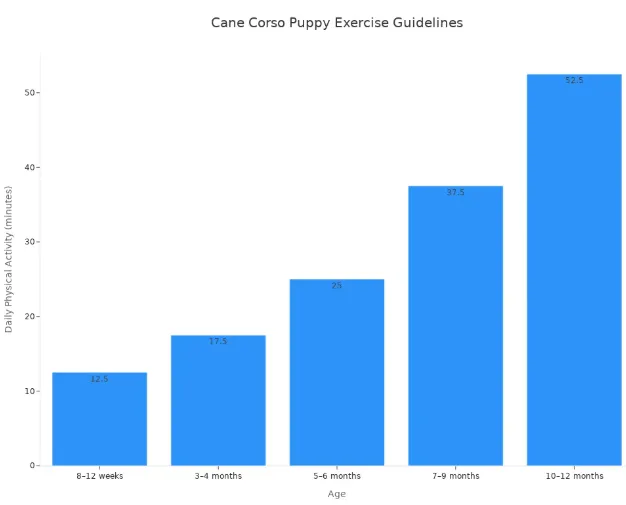
Match exercise to your Cane Corso puppy's age. Their bones are still growing. Too much exercise can hurt them. Follow these rules for safe play.
| Age | Daily Physical Activity (minutes) |
Type of Activity |
|---|---|---|
| 8–12 weeks | 10–15 minutes, 2x/day | Light play, short walk |
| 3–4 months | 15–20 minutes, 2x/day | Walks, basic training |
| 5–6 months | 20–30 minutes, 2x/day | Walks, fetch, socializing |
| 7–9 months | 30–45 minutes, 2x/day | Structured play, leash training |
| 10–12 months | 45–60 minutes, 2x/day | Hiking, longer walks |
This chart shows daily activity. It is for your Cane Corso puppy. It shows different ages.
Types of Safe Puppy Exercise
Add different activities. Do this for your Cane Corso puppy. These help their body and mind.
Leash Walks: Start with short walks. Walk slowly. Make them longer as your puppy grows.
Play Sessions: Play games like tug-of-war. Play fetch and hide-and-seek. These build muscles. They make the mind sharp.
Socialization: Let your Cane Corso puppy meet other dogs. Let them meet people. This is good for their mind. It is also good for their body.
Basic Obedience Training: Commands like sit and stay. These use their mind. They also use their body a little.
Puppy Agility (Low-Impact): Use low Canine Agility Training Equipment or tunnels. This helps them move well. Make sure it is gentle. Always watch them.
Preventing Overexertion and Injury
Protect your Cane Corso puppy. Do not let them exercise too much. Their bones are still soft. Too much activity can hurt them. It can cause joint problems. These include hip or elbow issues. Do not run on hard ground. Do this with puppies under 12 months. Do not let them jump from high places. Limit climbing stairs. Do not play too long. All activity should fit their age. Ask a vet if you are unsure. When necessary, you can add some Glucosamine And Chondroitin For Dogs to its daily diet.This is about your Cane Corso's fitness.
Too much activity can hurt big puppies. It can make hip and elbow problems worse. For hip problems, too much activity is a factor. It makes the problem more serious. For elbow problems, too much activity is a factor. This is if they jump too much. This is before their bones close. This happens at 12-18 months.
Cane Corso puppies are big dogs. Their joints need more time to grow. This means stress can cause injury. Injured joints get arthritis sooner. Their size adds strain. This is on their joints.
Mental Stimulation Activities
Your Cane Corso needs mental stimulation. This is as much as physical exercise. A bored Cane Corso can cause trouble. Give them mental enrichment activities. This keeps their minds busy.
Agility training is good. It helps their mind. Cane Corso puppies think fast. They make choices. This is while on courses.
This challenge keeps their minds sharp. It stops boredom. It stops bad actions.
The 'Foundation for Agility' course is for new learners. It teaches skills. These include handling. It also teaches body awareness. You can start at home. No special gear is needed.
Use puzzle toys. Try scent work. Teach new commands. These challenge their brains. They help use up energy. This is a healthy way.
Structured Playtime vs. Free Play
Balance playtime for your Cane Corso puppy. Have structured play. Also have free play. Structured play has rules. These are games like fetch. Or tug-of-war. Or training. These build your bond. They help with obedience. Structured walks are also key. They teach good leash manners.
Free play lets your puppy explore. They interact naturally. This can be in a safe yard. Or a dog park. Free play helps them learn social skills. It also uses up extra energy. Both types of play are good. They help your Cane Corso. They meet their unique needs. They are a high energy breed.
Addressing Common Behavioral Challenges
Your cane corso puppy may have some problems. You can fix these. Use steady training. Understand your dog.
Nipping and Biting Management
Puppies use their mouths. Nipping and biting are normal. Teach your cane corso to bite softly. If your puppy bites hard, yelp loudly. This is like another puppy's sound. Then, stop playing. Do this for a few minutes. This teaches them. Hard bites end fun time. Give them good chew toys instead.
Destructive Chewing Solutions
Bad chewing can be hard. It often comes from boredom. Or from being worried. Give your puppy good ways to use energy. Teach them how to chew right.
You can stop bad chewing:
Find out why they chew. Is it boredom? Or worry?
Give many good chew toys.
Make your house safe for dogs. Move valuable things.
Try frozen things. Ice cubes help. Wet cloths help. This is for teething pain.
Separation Anxiety Prevention
Stop separation anxiety early. Your puppy should feel safe alone.
- Start alone time training soon.
- Slowly make alone time longer. Start with short times.
- Give special treats. Or puzzle toys. Do this when you leave. This makes leaving good.
- Leave and come back calmly. Do not make big goodbyes.
- Make a safe place for your puppy. This builds their confidence.
- Keep daily routines steady. This helps build confidence.
Resource Guarding Mitigation
Resource guarding is when a dog protects things. Like food or toys. You can stop this. Teach your puppy. People coming near their things means good stuff. Go near your puppy while it eats. Drop a good treat near its bowl. This teaches them. Your being there is good.
Excessive Barking Strategies
Too much barking can be annoying. Your puppy barks to talk. You need to know why.
- Teach 'alone time'. This stops barking from worry.
- Reward quiet behavior.
- Make sure your cane corso gets enough play. And brain work.
- Build trust with your puppy.
- Do not reward barking by mistake. Even bad attention can be a reward.
Be patient. Train them steadily. This is important. Your puppy will learn better ways to show feelings.
Nutrition and Health for Growing Cane Corsos
Proper health and nutrition are vital for your growing cane corso. You must provide the right diet. This supports their rapid growth and development. Good nutrition prevents many future problems.
Choosing the Right Puppy Food
Selecting the best food for your puppy is crucial. Large breed puppies like the cane corso have specific dietary needs. You should look for certain qualities in their food.
Protein and Calcium Content: Avoid diets too high in protein and calcium. This can cause fast growth. It stresses maturing joints and hips. Feed your puppy a lower protein diet. This is suitable for adult dogs or large breed puppies. You can combine kibble, raw feeding, and supplements.
Quality of Ingredients: Choose foods with high-quality ingredients. Avoid cheap fillers like corn. Corn is not digestible for dogs. It lacks nutrition. It can cause allergies and other health issues.
Avoid Detrimental Ingredients: Specifically, do not feed your puppy corn. It offers no nutritional value. It can lead to health problems.
Overall Food Quality: Prioritize quality over cost. Good food supports a longer, healthier life. Be careful with premium labels. Some brands spend more on marketing than on good ingredients.
Feeding Schedules and Portions
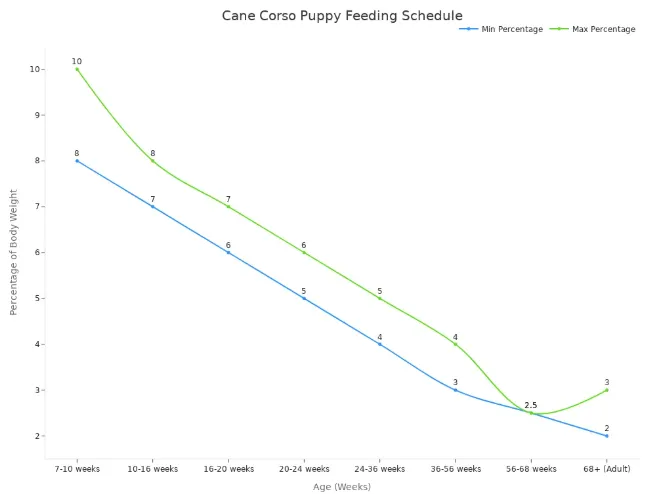
Your cane corso puppies need a consistent feeding schedule. Adjust food amounts as they grow. They should stay lean to protect their joints. This chart provides a guide for feeding percentages based on body weight:
| Age (Weeks) | Amount to Feed (Percentage of Body Weight) |
|---|---|
| 7-10 weeks | 8-10% |
| 10-16 weeks | 7-8% |
| 16-20 weeks | 6-7% |
| 20-24 weeks | 5-6% |
| 24-36 weeks | 4-5% |
| 36-56 weeks | 3-4% |
| 56-68 weeks | 2.5-2.5% |
| 68+ (Adult) | 2-3% of ideal body weight |
- Watch your puppy carefully as they develop.
- Adjust feeding amounts as they grow. Keep them lean to protect their joints.
- Some puppies need more food. Others need less.
- Use this chart as a guide. Observe your puppy to prevent too much weight gain.
Importance of Regular Vet Check-ups
Regular vet visits are essential. Your veterinarian monitors your puppy's growth. They can catch health issues early. Follow their advice on vaccinations and parasite control. These visits ensure your puppy stays healthy.
Recognizing Signs of Illness
You should know common signs of illness in your cane corso. Eye conditions like Entropion (inward eyelids) and Ectropion (outward eyelids) can cause discomfort. Cherry eye, a prolapsed tear gland, is also common. These often need surgery. Demodectic Mange, a skin condition from mites, causes hair loss.
Joint disorders like Osteochondritis Dissecans (OCD) can appear between 4 to 12 months. OCD affects about 5-10% of large breed puppies. Entropion can be present at birth or appear in young adults. Demodectic mange can also develop if their immune system is weak. Hip dysplasia symptoms usually show in adult dogs, but can start in puppies. Watch for limping or changes in movement.
Raising your Cane Corso puppy needs steady training. It needs proper exercise. Early socialization is also key. These make a well-behaved dog. You need to be patient. You need to work hard. Build a strong bond. Do this with steady training. This journey is good. These tips help your puppy's life.
FAQ
How much exercise does a Cane Corso puppy need daily?
Your Cane Corso puppy needs 60-90 minutes of exercise each day. This includes walks and jogs. It also includes playing games. You should also make them think. This stops them from being restless. It helps them grow strong. Change what they do as they get older. This stops them from getting hurt.
What is the most effective training method for a Cane Corso puppy?
Positive reinforcement works best. You give treats and praise. Do this when they act well. This makes you and your puppy close. It makes them do good things again. Do not punish them harshly. This can hurt trust. It can cause bad actions.
When should I begin socializing my Cane Corso puppy?
Start showing your puppy new things early. Do this between 3 and 14 weeks old. Let your puppy see new things. Let them hear new sounds. Let them meet people. Let them meet other animals. This helps them become a sure and good adult. Early new experiences stop fear. It stops anger later.
How can I prevent my Cane Corso puppy from destructive chewing?
Give them many good toys to chew. Make your home safe for your puppy. Move things you value. Chewing badly often comes from being bored. Or from being worried. Give your puppy lots of play. Give them things to think about. This keeps them busy.



Blog comments
0 Comments