
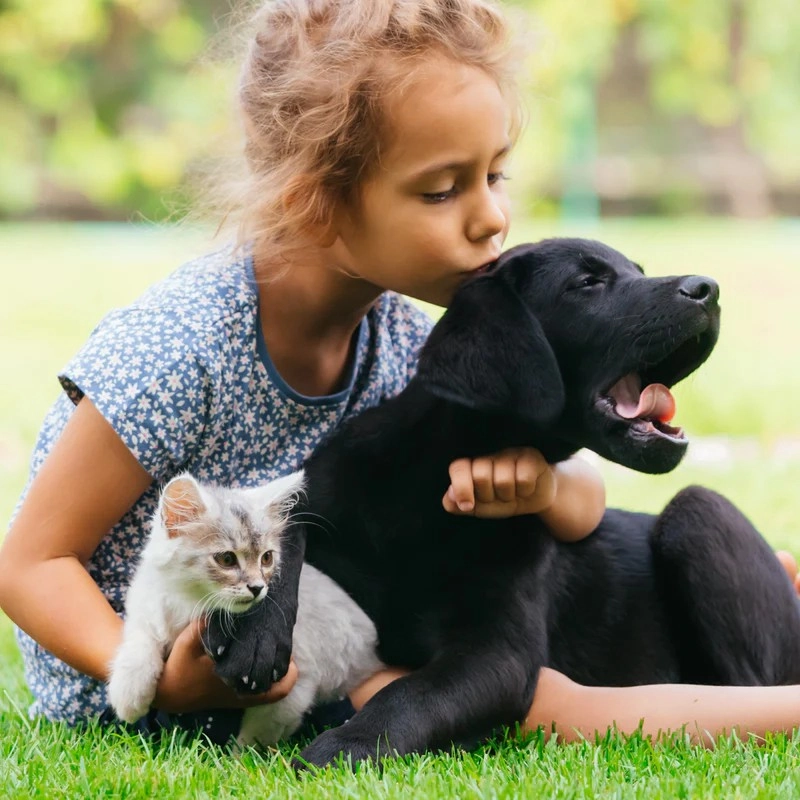
I. Understanding Gut Microbiota in Dogs
Think of a dog’s gut as a bustling "microbial community" teeming with thousands of microorganisms—bacteria, fungi, viruses, and more. Collectively, these microbes are called the "gut microbiota." The balance and health of this community directly shape a dog’s digestion, ability to fend off harmful pathogens, intestinal wellness, and overall quality of life.
In a healthy gut, "good bacteria" (beneficial microbes) dominate—strains like lactobacilli and bifidobacteria take the lead. They break down nutrients in food, block harmful "bad bacteria" from taking hold, and regulate the immune system. But when good bacteria dwindle and bad bacteria multiply, the microbiota becomes imbalanced (a state called dysbiosis). This can trigger diarrhea, constipation, frequent infections, or even chronic discomfort. Canine probiotic supplement act like "reinforcements for the good bacteria army": they boost beneficial microbe levels, restore order to the gut, and fix dysbiosis.
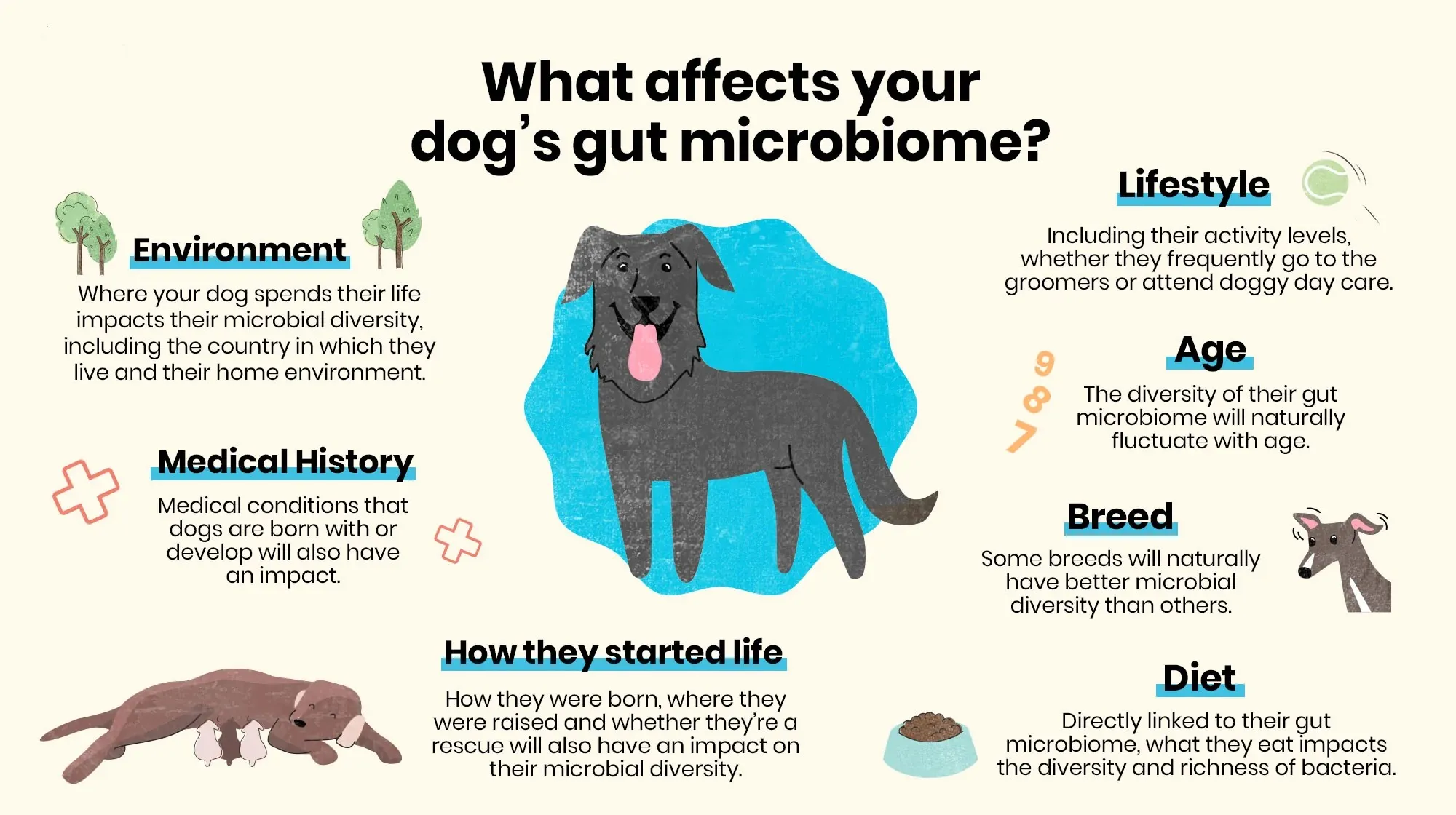
II. What Disrupts a Dog’s Gut Microbiota?
1. Age: From Puppyhood to Senior Years—Microbiota Evolves
A dog’s gut microbiota changes dramatically with age, mirroring their physical growth and aging. Newborn puppies start with a blank slate: their first gut microbes come from their mother’s birth canal during delivery and from breast milk afterward. At this stage, diversity is low, but the few strains present (mostly lactobacilli and bifidobacteria) are critical—they help develop the intestinal lining and kickstart the immune system.
By adulthood, the microbiota stabilizes. Beneficial bacteria reach peak diversity, efficiently digesting proteins and carbs in kibble while forming a strong barrier against pathogens. But as dogs enter their senior years, digestion slows, immunity weakens, and microbiota diversity drops. Good bacteria decline, and potentially harmful strains (like Clostridium) may rise. This explains why senior dogs often struggle with diarrhea, constipation, or frequent colds.
Probiotics target these age-related changes: For puppies, lactobacilli- or bifidobacteria-based probiotic chews for dogs strengthen their fledgling microbiota, cutting down on bacterial diarrhea risk. For seniors, choose hardy strains (such as Bacillus subtilis) that survive stomach acid and colonize the gut—these boost good bacteria levels, suppress harmful ones, and ease age-related digestive issues.
2. Breed: Microbiota Preferences Are Breed-Specific
Just as breeds have unique traits (a Husky’s love of cold vs. a Poodle’s hypoallergenic coat), they also have distinct microbiota "fingerprints" shaped by evolution. Sled breeds like Huskies and Akitas, for example, evolved on high-protein diets in cold regions—their guts are rich in bacteria that break down protein but lack strains that digest fiber. Small companion breeds (Poodles, Bichon Frises), however, adapted to human diets over centuries—their microbiota includes diverse fiber-digesting bacteria to process vegetables and whole grains.
Probiotic use should match these breed differences: For sled breeds, fiber-digesting probiotics (like certain Bifidobacterium strains) compensate for their fiber-processing gap, preventing constipation from high-meat diets. For gut-sensitive breeds (Golden Retrievers, Labradors), anti-inflammatory, gut-stabilizing strains (such as Enterococcus faecalis) reduce allergy flare-ups and diarrhea.
3. Medical History: Illness and Meds Are Major Disruptors
Illness and medication are top causes of gut dysbiosis. Obese dogs, for instance, have higher levels of Firmicutes—a bacterial phylum that soaks up energy. This creates a vicious cycle: more Firmicutes mean more energy absorption, leading to more weight gain, which further disrupts the microbiota. Intestinal parasites like Giardia also take a toll: even after treatment, they wipe out large numbers of good bacteria, leaving dogs prone to recurring diarrhea.
Antibiotics are the most disruptive of all. They act like "blanket killers," wiping out harmful pathogens but also wiping out beneficial gut bacteria. This creates a "microbial vacuum" that lets drug-resistant bacteria (like Clostridioides difficile) thrive. Canine probiotic chews counter this damage: Give them 2–3 hours apart from antibiotics to protect good bacteria; continue use after the antibiotic course to speed recovery. For obese dogs, metabolism-regulating probiotics reduce energy absorption and aid weight loss. For parasite survivors, long-term probiotic use rebuilds the intestinal barrier and cuts down on relapses.
4. Early Life Experiences: Puppyhood Sets the Microbiota Foundation
A dog’s first weeks of life shape their microbiota for years. Puppies born vaginally get a dose of beneficial bacteria from their mother’s birth canal and more from nursing—this gives them a strong, healthy microbial base. Cesarean (C-section) puppies miss out on birth canal bacteria, so their first microbes come from the environment. This leads to less diverse, less beneficial microbiota, making them more likely to get sick or develop allergies as puppies.
Stray or internationally rescued dogs have another challenge: constant exposure to outdoor environments gives them highly diverse microbiota, but it may include pathogens. Artificially bred pet puppies, by contrast, live in clean, controlled spaces—their microbiota is less diverse but more stable. Early probiotic intervention is key here: Give C-section puppies probiotics that mimic maternal birth canal bacteria right after birth to fix initial gaps. For rescued strays, start probiotics once a vet rules out infectious diseases—this helps filter out harmful bacteria and eases their gut’s transition to a new home.
5. Genetics: Microbiota Traits Are Passed From Mother to Puppy
A dog’s microbiota is partly "inherited" from its mother. Up to 30–50% of a puppy’s gut microbes come from mom—via breast milk, licking, and skin contact. If a mother dog has chronic dysbiosis (e.g., frequent diarrhea), her puppies are far more likely to have sensitive guts. Genes also play a role: Some breeds have genes that reduce intestinal mucus production. Mucus is the "glue" that helps good bacteria stick to the gut lining—less mucus means beneficial strains struggle to colonize, leading to frequent dysbiosis.
The solution? A "mother-and-puppy" probiotic strategy. For breeding or nursing mothers, probiotics optimize their microbiota, ensuring they pass beneficial strains to puppies via milk. For breeds with genetically weak intestinal barriers, choose mucus-adhering strains (like Bifidobacterium lactis). These form a protective layer on the gut lining, strengthening the "microbial wall" and offsetting genetic flaws.
6. Environment & Lifestyle: The World Shapes Gut Health
A dog’s living situation and daily routine quietly reshape their microbiota. Rural dogs spend hours outdoors—digging in dirt, interacting with other animals, and exploring plants. This exposes them to a wide range of microbes, leading to diverse, resilient microbiota and stronger immunity. Urban dogs, however, stay indoors most of the time—limited exposure to environmental bacteria leads to less diverse microbiota and higher dysbiosis risk.
Cohabitation matters too: Dogs living with other pets or kids get more microbe exposure via play and contact, building more stable, diverse microbiota. Seasonal shifts also play a role—summer brings richer microbiota, thanks to more outdoor time and access to fiber-rich fresh fruits and veggies.
Probiotics help balance these environmental gaps: Regular probiotic use for urban dogs弥补 (compensates for) limited microbe exposure. Giving probiotics before seasonal changes (e.g., summer to fall) boosts gut resilience and reduces autumn diarrhea risk.
III. Conclusion: Gut Microbiota = Key to a Healthy Dog
A dog’s gut microbiota is an "invisible health controller." Age, breed, illness, meds, early life, genetics, and environment all shape its balance. When dysbiosis hits, digestion suffers, immunity drops, and chronic issues follow. Probiotics are the simplest, safest way to regulate this balance—matching the right strain to your dog’s needs boosts good bacteria, suppresses bad bacteria, and heals the gut.
As a dog owner, don’t just focus on kibble—watch for dysbiosis red flags: diarrhea, constipation, excessive shedding, or frequent infections. Catching these early and using probiotics, paired with a breed-appropriate diet and active lifestyle, will keep your dog healthy and by your side for years.

Blog comments
0 Comments