
Nutrition is very important for keeping your kelpie healthy and active. Kelpies do best on a balanced diet with proteins and key nutrients. Since they are active dogs, they need good food that meets their energy needs. Good nutrition helps them perform better and live longer. This makes it important for every kelpie owner to watch their dog's eating habits.
Key Takeaways
Give your Kelpie good dog food that has meat first. This helps them get enough protein for their active life.
Stay away from bad foods like chocolate, onions, and xylitol. Keeping these away helps keep your Kelpie healthy.
Change your Kelpie's food based on their age. Puppies need more calories, while older dogs need food rich in nutrients for their joints.
What Kelpies Eat
Common Foods
Kelpies do best on a complete and balanced diet that meets their special needs. Here are some common foods that give important nutrients for your Australian Kelpie:
- High-Quality Dog Food: Choose dog food with meat as the first ingredient. This helps your Kelpie get enough protein for their active life.
- Lean Meats: Chicken, turkey, and beef are great protein sources. They help build and keep muscle.
- Fish: Salmon and sardines are good choices. They are full of omega-3 fatty acids, which help skin and coat health.
- Vegetables: Carrots, green beans, and sweet potatoes give vitamins and minerals. They also add fiber to help digestion.
- Fruits: Apples and blueberries can be healthy snacks. They are full of antioxidants and vitamins.
Active Kelpies, especially those that work or play sports, may need more calories for energy. As they get older, their food needs may change. Senior Kelpies might do better with meals that have fewer calories and fat but are rich in nutrients for joint health, like glucosamine and chondroitin.
Foods to Avoid
While many foods are good, some can be dangerous or even toxic to Kelpies. Here’s a list of foods to stay away from:
- Chocolate: Toxic amounts can cause serious symptoms and even death.
- Xylitol: Very toxic, can cause low blood sugar and liver failure.
- Onions and Garlic: Can cause anemia and other serious health problems.
- Macadamia Nuts: Can lead to weakness and shaking.
- Avocados: Contains persin, which can harm dogs.
- Baked Goods: Often have xylitol, which is toxic.
- Baking Powder and Baking Soda: Can cause stomach issues.
Keeping these foods away from your Kelpie is very important for their health. Always check labels and be careful about what you give your furry friend.
Breed-Specific Nutrition Tips

Key Nutrients
Feeding your Australian Kelpie means knowing what they need. Kelpies do best on a diet full of special nutrients for their active lives. Here’s a list of the key nutrients to focus on:
| Nutrient Type | Importance for Kelpies | Difference from Other Breeds |
| High-quality animal protein | Helps muscles heal and boosts the immune system | All breeds need it, but Kelpies may need more because they are active. |
| Healthy fats | Fuels the brain and keeps energy up | Other breeds may need different amounts based on size and activity. |
| Bone | Gives calcium and minerals for strong bones and joints | Similar needs for all breeds, but Kelpies may need more due to being active. |
| Fruits and vegetables | Provide fiber and important vitamins | Kelpies usually need less than some other breeds. |
| Nutrient-dense offal | Works like a multivitamin for good health | All breeds gain from it, but Kelpies may do better with more organ meat. |
| Water | Key for staying hydrated and healthy | All dogs need water, but Kelpies might need more because they are active. |
| Carbohydrates | Low need, especially for refined carbs | Kelpies can’t handle carbs as well as some other breeds. |
Protein and Omega-3s
Protein is very important in your Kelpie's diet. It helps build muscles and gives them energy. Active dogs like Kelpies need more protein than dogs that don’t move much. Here are some key points:
- Protein is key for muscle strength and recovery in active dogs, including Kelpies.
- Active dogs need more protein than lazy ones because they use more during exercise.
- Enough protein helps stop tiredness and boosts performance in active dogs.
- A diet with at least 26% protein is best for active dogs.
Omega-3 fatty acids are also very important for your Kelpie's health. These healthy fats help the brain, make their coat shiny, and lower inflammation. Adding fish or fish oil to your dog's food can really help their health.
By following these nutrition tips for Kelpies, you can make sure your dog gets the best food for their active life. This special care will help keep them healthy, full of energy, and ready for fun.
Life Stage Feeding
Feeding your Australian Kelpie properly at different life stages is crucial for their health and well-being. Each stage has unique needs, so let’s break it down.
Puppies
When it comes to puppies, you want to provide them with the right nutrition to support their growth. Puppies need more calories and nutrients than adult dogs. Here’s a quick guide on how much food to feed your Kelpie puppy based on their age:
| Age (Weeks) | Amount to Feed |
| 7-10 weeks | 8-10% of body weight |
| 10-16 weeks | 7-8% of body weight |
| 16-20 weeks | 6-7% of body weight |
| 20-24 weeks | 5-6% of body weight |
| 24-36 weeks | 4-5% of body weight |
| 36-56 weeks | 3-4% of body weight |
| 56-68 weeks | 2.5-3% of body weight |
| 68+ (Adult) | 2-3% of ideal body weight |
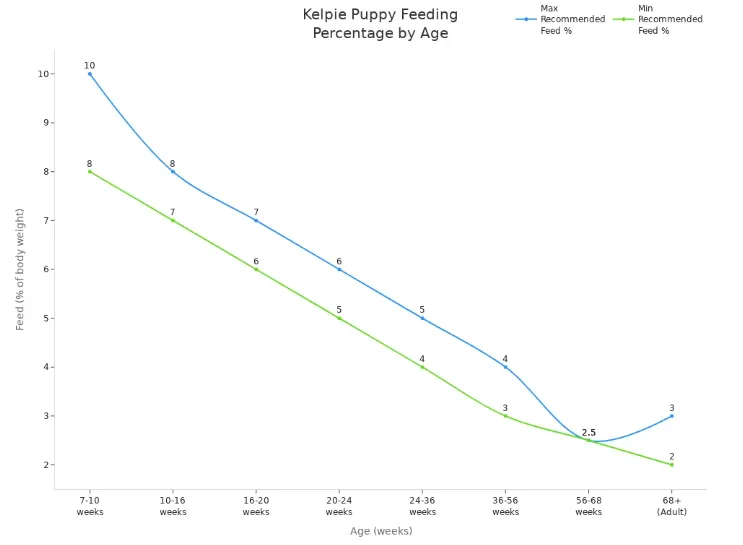
Feed your puppy three to four times a day to keep their energy levels up. This frequent feeding helps them grow strong and healthy.
Adults
For adult Kelpies, focus on a balanced diet that meets their energy needs. They require high-quality protein and healthy fats to maintain their muscle mass and energy levels. You should feed them twice a day, adjusting portions based on their activity level. Active Kelpies may need more food, while less active ones might require less.
Seniors
As your Kelpie ages, their dietary needs change. Senior dogs often need fewer calories but still require nutrient-dense food to support joint health and overall well-being. Look for Glucosamine Supplements For Dogs that includes glucosamine and chondroitin. Feed them smaller, more frequent meals to aid digestion.
By tailoring your Kelpie's diet to their life stage, you ensure they stay healthy and happy throughout their lives.
How to Choose the Best Food for Your Kelpie
Picking Good Food
Choosing food for your Kelpie can be tough. Focus on quality to make it simpler. Here are some tips to help you pick the right food:
- Look for high-quality protein sources: Ingredients like chicken, turkey, beef, and fish should be first. These proteins help muscles grow and keep your dog healthy.
- Check for superfoods: Ingredients like wheatgrass and berries give important vitamins, minerals, and antioxidants. They boost your dog's immune system and energy.
- Avoid grains and fillers: These can cause allergies and stomach problems. A diet without fillers gives your Kelpie the nutrients they need without bad additives.
Vet Advice
Talking to a vet is key when choosing your Kelpie's food. Here’s why:
- Vets often suggest a raw diet that fits your dog's needs.
- For puppies, a raw puppy formula helps them grow safely.
- Switching to adult food after six months keeps nutrition right.
- Keeping your Kelpie at a good weight helps their joints and life span.
- Adding joint-supporting minerals and healthy fats is important for active Kelpies.
- If needed, think about supplements for joint and gut health.Examples include Canine Multivitamin and Canine Probiotic Supplement.
- Always make sure your dog has fresh, clean water to stop dehydration.
By following these tips and talking to your vet, you can pick the best food for your Kelpie. This keeps them healthy and happy.
Addressing Health Concerns
Weight Management
Keeping your Kelpie at a healthy weight is very important. Being overweight can cause serious problems like joint pain and heart disease. Here are some tips to help manage your dog's weight:
- Make mealtimes fun! Use food puzzles or treat toys to keep your Kelpie interested.
- Cut down portion sizes, but do this with your vet's help to keep a balanced diet.
- Think about a weight loss diet that helps your dog lose weight slowly without losing nutrition.
- Increase exercise. Regular walks and playtime can help burn extra calories.
- Stop giving treats and food scraps. Instead, use part of their daily food as treats.
- Weigh food carefully to make sure portions are right.
- Make sure everyone in your home follows feeding rules to prevent overfeeding.
Allergies
Kelpies can have food allergies, which may cause problems like itchy skin and ear infections. Common allergens are beef, dairy, and wheat. If you think your Kelpie has allergies, talk to your vet. They might suggest a food elimination trial to find the cause. This means feeding a special hypoallergenic diet for 8 to 12 weeks.
Here are some common food allergens for Kelpies:
| Common Food Allergens | Type |
| Beef | Animal-based |
| Dairy | Animal-based |
| Chicken | Animal-based |
| Wheat | Plant-based |
| Eggs | Less Frequent |
| Pork | Less Frequent |
| Fish | Less Frequent |
| Soy | Less Frequent |
| Rice | Less Frequent |
| Corn | Less Frequent |
For Kelpies with food sensitivities, think about hypoallergenic diets like Healthy Active Pet's turkey and salmon freeze-dried dog food. This option gives good protein sources while avoiding common allergens. Always check with your vet to adjust the diet to your dog's needs.
By knowing how nutrition can help with common Kelpie health issues, you can keep your furry friend happy and healthy.
In conclusion, good nutrition is very important for your Australian Kelpie's health and how well they perform. Pay attention to high-quality animal proteins, healthy fats, and low carbohydrates to meet their special needs. Don't forget to talk to your vet for advice on their diet. By following good feeding habits, you can help your Kelpie do well!
FAQ
What should I feed my Kelpie?
Feed your Kelpie high-quality dog food with meat as the first ingredient. Include lean meats, fish, vegetables, and fruits for balanced nutrition.
How often should I feed my Kelpie?
Adult Kelpies should eat twice a day. Puppies need three to four meals daily to support their growth and energy levels.
Can Kelpies have treats?
Yes, but choose healthy treats. Avoid processed snacks and stick to fruits or vegetables. Always consider their overall diet and weight.
Blog comments
0 Comments